
Tuesday, September 13, 2011
A Handy "app"!
Us "Bloggers" are a strange bunch, we like to spread the wealth. Well now a post can be made to the EMCOMM site remotely from iPhones an iPod Touch appliances such as this post. Yet again another useful tool for us communicators. 73 de W1KRP

Monday, May 9, 2011
EMCOMM Meeting!
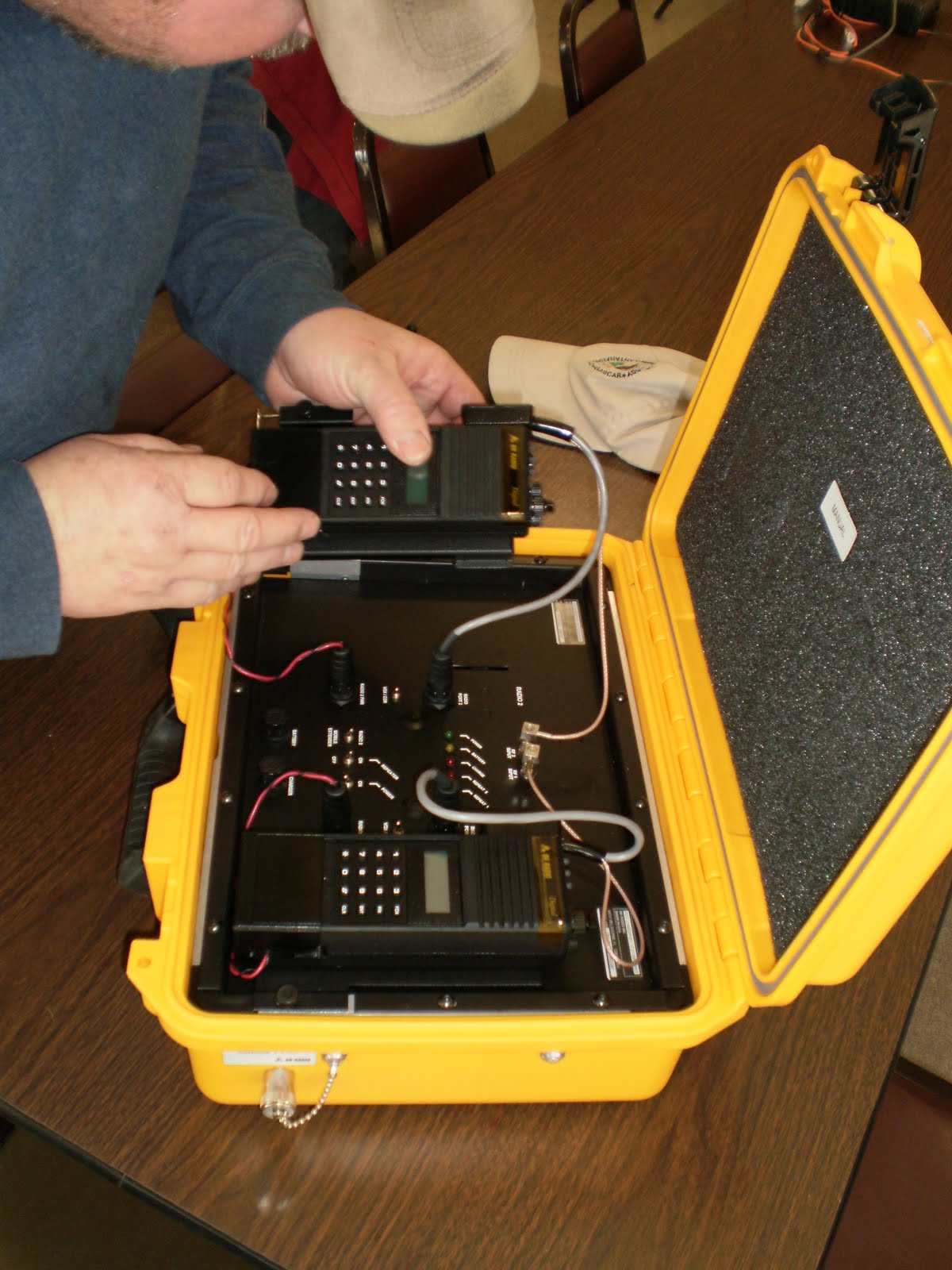
Hancock County EMCOMM meeting this coming Thursday, the 12th at 1830 hours prior to the scheduled EAWA meeting. Anyone interested in Ham radio and its role in Emergency Communications support to served agencies is urged to attend. Meetings are held at Meadow View Apartments, Phase 4 Dining Hall. Go 3/10 mile past Maine Coast Memorial Hospital on Union Street and turn right onto Tweedie Lane, building is in there about 75 yards on left. Dining Hall on the front of the building. 73
Tuesday, January 18, 2011
EAWA Participates In Winter Field Day

SPAR Announces;
“Not only during Field Day in June, do the bands come alive with improvised signals proving the ability to respond to emergencies. Since emergencies and natural disasters don't always happen in the summer, during Winter Field Day, frigid winds, icy limbs and bitter cold replace the thunderstorms and blistering heat of summer. In 2007 SPAR established a Winter Field Day event and invited all Amateur Radio operators to participate. The event was repeated in 2008 and was considered a success, so it was then designated an annual event to be held the last full weekend each January. In 2007 - 2010 the event was enjoyed by many, but it is time to issue the invitation for the Fifth Annual SPAR Winter Field Day!”
“The 2011 Winter Field Day will be held from 1700 UCT (12:00 noon EST) Saturday January 29, 2011 through 1700 UCT (12:00 noon EST) Sunday January 30, 2011. The object of the event is familiar to most Amateur Radio operators: set up emergency-style communications and make as many contacts as possible during the 24 hour period. The rules encourage as many contacts on as many bands and modes as possible, because during a real emergency, the most important factor is the ability to communicate, regardless of band, mode or distance.”
“The official rules can be found at the SPAR web site. The event is open to all amateurs, although we encourage everyone to join in the discussions and other activities sponsored by SPAR. Information about SPAR can be found on the SPAR Home Page. Membership is free and open to all amateurs who want to encourage technical and operating skills. You can register by going to the SPAR Forum and registering, using your amateur callsign as your user name. “
NOW: Here is Ellsworth, the Ellsworth Amateur Wireless Association (EAWA) will be participating in it’s second annual Winter Field Day. EAWA will operate from Meadow View Apartments Phase 4 dining hall where the group along with Hancock county EMCOMM hold their monthly meetings (For those with GPS it is “25 Tweedie Lane”) The group will start operating at 1200 hours on Saturday January 29th and operate until 2000 hours Saturday evening. There will be a potluck supper at 1700 hours and those attending are urged to bring a dish to share with the group, and you might want to bring drinks for the day as well. Set up will beging earlier than 1200 hrs so you might want to stop by to lend a hand as well. This is a fun time to join in on during the cold winter months..getting us psyched up for the big June event! Hope to see you there, and if you are not a Ham but interested in what this great hobby is all about you are invited to attend and find uot! Further info email Phil, N1EP at n1ep@yahoo.com or Mark N1MEA at n1mea @myfairpoint.com
Monday, December 13, 2010
WHEN REPEATERS FAIL
Reliance upon repeaters or repeater systems for emergency communications is not wise. It is not uncommon for a repeater to fail, or be knocked out by some external force (e.g.- lightning, high winds, etc.). Repeaters can also be very "political."
Since the beginning of radio, the focus by most amateurs has been to see how far they can reach out with their signals. While DXing is an enjoyable pastime, it is rarely needed for EMCOMM, DON'T RULE IT OUT COMPLETELY FOR PUBLIC SERVICE! The ability to effectively pass traffic over long distances is often important, even lifesaving!
HF signals propagate either by a) line-of-sight; b) ground-wave (follows the contours of the earth); or c) sky-wave. Line-of-sight is usually good for a few miles.
Ground-wave is usually good from about 20 to 50 miles. NVIS sky-wave takes over at about 50 miles, and depending upon the frequency selected is good out to 500 miles. Beyond that, we are in the general area of low-angle DX.
NEAR AND FAR
Very often, a 40 meter signal at mid-day, can be heard near and far, all three types of propagation at the same time! To explain propagation, whether low-angle DX or NVIS, or somewhere in-between, I often use this illustration: Just as a billiard ball can be bounced toward a particular pocket by controlling the angle that it hits the bumper of the pool table, so do radio signals "bounce" (actually refract is more descriptive) off the ionosphere. Now, envision the earth as a round pool table with the ionosphere as the circumference or boundary. This "bumper" is constantly expanding and/or contracting in concentric circles, and varies in density often depending upon the time of day, the season, recent solar activity and/or the sun-spot cycle. This phenomenon is a science unto itself and is not the subject here. Just know that for local and regional EMCOMM, NVIS HF (usually in the 40 and 75/80 meter bands) can provide reliable communications over mountain ranges and under the most extreme conditions. The big advantage is that we are not dependent upon some remote mechanical device.
NVIS MADE SIMPLE
I (and others) have experimented with simple (1/2 wave doublet, G5RV, etc.) wire HF NVIS antennas as low as actually lying on the ground to 3 feet above ground, and they work amazingly well! A lot depends upon ground (earth) conductivity and how far down below the surface the moisture content may be. However, I recommend that any antenna be at least 8 ft. above the ground to prevent someone from tripping over it.
Remember that the higher you elevate a flat (horizontal) antenna (e.g. a simple wire doublet or G5RV) above earth ground, the more the NVIS effect will be lessened. A little height will allow for better line-of-sight and ground-wave propagation. I find that 25-30 ft above the earth works fairly well both near and far. Also the higher you go, the more directional it will be. An Inverted V antenna, at any height, will be less directional, but the NVIS effect will be less than a "flat-top."
Reference: http://www.EMCOMM.org/projects/nvis.htm
OTHER "REPEATER FREE" OPTIONS
Also, to avoid reliance upon repeater(s), don't rule out VHF simplex. Don't believe the myth that VHF is strictly "line-of-sight!" I routinely communicate PTP (Point-To-Point) over 50 miles on 2 meter FM simplex using only a simple ground plane antenna 20 ft. up...and with a mountain range between my station and the other! And over 100 miles routinely using a 13 element Yagi. I also communicate 300 miles on 2 meter SSB and/or CW using a 13 element Yagi (horizontal polarized). A skilled relay operator in the right location doubles these ranges! Also, consider six meters simplex FM, SSB, CW for EMCOMM.
REGULAR NETS
There are so many variables, regular participation in nets will provide you with the experience and knowledge of what works and what doesn't!
As far as of lack of interest in serious EMCOMM by hams is concerned...I wish I had the answer! All you can do is to try to explain that skilled and disciplined operators become that way and also maintain their skills by regularly participating in regularly-scheduled properly-run (non-repeater) public service nets. If there isn't one in your area...why not start one?
Drawn from: http://www.emcomm.org/archives/EQ/2010/summer2010.htm
Since the beginning of radio, the focus by most amateurs has been to see how far they can reach out with their signals. While DXing is an enjoyable pastime, it is rarely needed for EMCOMM, DON'T RULE IT OUT COMPLETELY FOR PUBLIC SERVICE! The ability to effectively pass traffic over long distances is often important, even lifesaving!
HF signals propagate either by a) line-of-sight; b) ground-wave (follows the contours of the earth); or c) sky-wave. Line-of-sight is usually good for a few miles.
Ground-wave is usually good from about 20 to 50 miles. NVIS sky-wave takes over at about 50 miles, and depending upon the frequency selected is good out to 500 miles. Beyond that, we are in the general area of low-angle DX.
NEAR AND FAR
Very often, a 40 meter signal at mid-day, can be heard near and far, all three types of propagation at the same time! To explain propagation, whether low-angle DX or NVIS, or somewhere in-between, I often use this illustration: Just as a billiard ball can be bounced toward a particular pocket by controlling the angle that it hits the bumper of the pool table, so do radio signals "bounce" (actually refract is more descriptive) off the ionosphere. Now, envision the earth as a round pool table with the ionosphere as the circumference or boundary. This "bumper" is constantly expanding and/or contracting in concentric circles, and varies in density often depending upon the time of day, the season, recent solar activity and/or the sun-spot cycle. This phenomenon is a science unto itself and is not the subject here. Just know that for local and regional EMCOMM, NVIS HF (usually in the 40 and 75/80 meter bands) can provide reliable communications over mountain ranges and under the most extreme conditions. The big advantage is that we are not dependent upon some remote mechanical device.
NVIS MADE SIMPLE
I (and others) have experimented with simple (1/2 wave doublet, G5RV, etc.) wire HF NVIS antennas as low as actually lying on the ground to 3 feet above ground, and they work amazingly well! A lot depends upon ground (earth) conductivity and how far down below the surface the moisture content may be. However, I recommend that any antenna be at least 8 ft. above the ground to prevent someone from tripping over it.
Remember that the higher you elevate a flat (horizontal) antenna (e.g. a simple wire doublet or G5RV) above earth ground, the more the NVIS effect will be lessened. A little height will allow for better line-of-sight and ground-wave propagation. I find that 25-30 ft above the earth works fairly well both near and far. Also the higher you go, the more directional it will be. An Inverted V antenna, at any height, will be less directional, but the NVIS effect will be less than a "flat-top."
Reference: http://www.EMCOMM.org/projects/nvis.htm
OTHER "REPEATER FREE" OPTIONS
Also, to avoid reliance upon repeater(s), don't rule out VHF simplex. Don't believe the myth that VHF is strictly "line-of-sight!" I routinely communicate PTP (Point-To-Point) over 50 miles on 2 meter FM simplex using only a simple ground plane antenna 20 ft. up...and with a mountain range between my station and the other! And over 100 miles routinely using a 13 element Yagi. I also communicate 300 miles on 2 meter SSB and/or CW using a 13 element Yagi (horizontal polarized). A skilled relay operator in the right location doubles these ranges! Also, consider six meters simplex FM, SSB, CW for EMCOMM.
REGULAR NETS
There are so many variables, regular participation in nets will provide you with the experience and knowledge of what works and what doesn't!
As far as of lack of interest in serious EMCOMM by hams is concerned...I wish I had the answer! All you can do is to try to explain that skilled and disciplined operators become that way and also maintain their skills by regularly participating in regularly-scheduled properly-run (non-repeater) public service nets. If there isn't one in your area...why not start one?
Drawn from: http://www.emcomm.org/archives/EQ/2010/summer2010.htm


EMCOMM Repeater Work

Kris KC7UNK (Standing), Mark N1MEA, Andy KB1TGL and Bob AA1PI work on the Hancock County EMCOMM Portable Repeater during a recent "Sunday Session" at Meadow View in Ellsworth.

Wednesday, September 8, 2010
Hammin.... Down East Style

Fred Lloyd, AA7BQ, QRZ founder and publisher is coming to the Ellsworth area this coming weekend. He contacted me earlier this week to see about interviewing me reference EMCOMM (He read this blog!). After discussion, we thought it would be a good article for QRZ on Ham Radio in Down East Maine in general. He thought it would be neat to meet with a group and pick our brains. So, this coming Sunday, 1300 hours at Meadow View Phase 4 where we hold most meetings, local Hams are invited to sit down over coffee and tell tall tales of the happenings of Down East Amateur Radio, regular and EMCOMM wise! Good opportunity to “git on the map”! Further info email me at res@gwi.net
Wednesday, September 1, 2010
Dealing with "Earl"

On Friday 9/3 there will be a EMCOMM net called at 1900 hrs on the Hancock County EMCOMM Repeater, the 146.910 machine (151.4 PL tone) located here in Ellsworth in preparation for the arrival of Hurricane Earl or the outskirts of said storm. Either way rain or high winds are possible and a slight NW change in track direction and we could be dealing with a more potent situation.This is also an opportune time to check out your home preparations (remember; take care of yourself, family, and home before EMCOMM comes into play!) and your radio comm. Centers (shacks). Make sure everything is charged up and supplies are checked. Be prepared, but foremost be safe!
Thursday, July 15, 2010
SERVING "SERVED" AGENCIES
Meeting the communications needs of "served" agencies is a challenging,
and often daunting proposition in today's complex disaster/emergency relief
arena. With the proliferation of emergency relief organizations, increasingly
sophisticated needs, all competing for that scarce resource--the volunteer- -
coupled with the emergence of other non-ARES amateur providers, it's enough to
make an ARES member's head spin. As more of the population moves to disaster-prone areas, and less government funding is available, more pressure is consequently placed on
agencies to use (and sometimes abuse) the volunteer sector for support of their
missions in disaster mitigation. Toes are sometimes stepped on and volunteer morale can be undermined. On the other hand, the League's formal relationships with served
agencies are vitally important and valuable to radio amateurs. They provide us
with the opportunity to contribute meaningfully to the relief of suffering among our
fellow human beings. Another substantial benefit not to be overlooked is that these relationships lend legitimacy and credibility for Amateur Radio's public service capability, and that is important when it comes time to defend our frequencies and privileges before the FCC and Congress, an ever more challenging task.
So, ARES' relationships with the emergency/disaster relief world are to be nurtured.
What to Do?
First, it is imperative that a detailed local operational plan be developed
with agency managers in the jurisdiction that set forth precisely what each
organization's expectations are during a disaster operation. ARES and agency
officials must work jointly to establish protocols for mutual trust and respect.
Make sure they know who the principle ARES official is in the jurisdiction.
All matters involving recruitment and utilization of ARES volunteers are directed
by him/her, in response to the needs assessed by the agency involved. Make
sure ARES counterparts in these agencies are aware of ARES policies,capabilities and perhaps most importantly, resource limitations. Let them know that ARES may have other obligations to fulfill with other agencies, too.
Technical issues involving message format, security of message
transmission, Disaster Welfare Inquiry policies, and others, should be reviewed
and expounded upon in the detailed local operations plans.
Source: Kentucky Amateur Radio Web Site – www.kyham.net
and often daunting proposition in today's complex disaster/emergency relief
arena. With the proliferation of emergency relief organizations, increasingly
sophisticated needs, all competing for that scarce resource--the volunteer- -
coupled with the emergence of other non-ARES amateur providers, it's enough to
make an ARES member's head spin. As more of the population moves to disaster-prone areas, and less government funding is available, more pressure is consequently placed on
agencies to use (and sometimes abuse) the volunteer sector for support of their
missions in disaster mitigation. Toes are sometimes stepped on and volunteer morale can be undermined. On the other hand, the League's formal relationships with served
agencies are vitally important and valuable to radio amateurs. They provide us
with the opportunity to contribute meaningfully to the relief of suffering among our
fellow human beings. Another substantial benefit not to be overlooked is that these relationships lend legitimacy and credibility for Amateur Radio's public service capability, and that is important when it comes time to defend our frequencies and privileges before the FCC and Congress, an ever more challenging task.
So, ARES' relationships with the emergency/disaster relief world are to be nurtured.
What to Do?
First, it is imperative that a detailed local operational plan be developed
with agency managers in the jurisdiction that set forth precisely what each
organization's expectations are during a disaster operation. ARES and agency
officials must work jointly to establish protocols for mutual trust and respect.
Make sure they know who the principle ARES official is in the jurisdiction.
All matters involving recruitment and utilization of ARES volunteers are directed
by him/her, in response to the needs assessed by the agency involved. Make
sure ARES counterparts in these agencies are aware of ARES policies,capabilities and perhaps most importantly, resource limitations. Let them know that ARES may have other obligations to fulfill with other agencies, too.
Technical issues involving message format, security of message
transmission, Disaster Welfare Inquiry policies, and others, should be reviewed
and expounded upon in the detailed local operations plans.
Source: Kentucky Amateur Radio Web Site – www.kyham.net
Subscribe to:
Posts (Atom)